How an Organized Home Affects Your Mental Load
When my Washington Post article about decluttering went live, the comments split into two very clear camps. Some readers said clutter makes it nearly impossible for them to think straight. Others said they live with clutter without a second thought and feel completely fine.
Both experiences are real. But here is what I know from working with clients and from my own life: clutter affects your mental load whether you notice it or not. The difference is your tolerance, not your immunity.
Even if a messy home does not make you anxious, you are still spending mental energy tracking where things are, spending extra time locating what you need, and holding the whole system in your head because no one else can navigate it. That is mental load. It is not about how much clutter bothers you. It is about how much invisible work your brain is doing to manage it.
What clutter actually does to your brain
Your brain is always scanning your environment, even when you are trying to focus on something else. Every pile on the counter, every item without a home, every corner that needs attention is visual clutter that your brain has to register and process. Your brain does not get to ignore it.
Research out of Princeton University shows that a cluttered environment makes it harder for your brain to process information and creates visual distractions that pull your focus away from what actually matters. On top of that, living in a messy home over time raises cortisol levels. Cortisol is the stress hormone your body produces when it is under pressure. A chaotic environment keeps that stress response running in the background, which is why so many people describe feelings of anxiety or a vague sense of unease at home, even when nothing specific is wrong.
The people who say clutter does not bother them may genuinely have a higher tolerance for discomfort before it becomes obvious. But the higher levels of cortisol and the effect on their nervous system are still happening.
A real example from my own life
I want to share a story because I think it explains this better than any data can. When the seasons changed this spring, getting dressed became a nightmare. My summer clothes were still in storage. I was pulling one or two pieces at a time from vacuum bags, but there was nowhere to store the bags after, and when I did laundry there was no room to put anything back. For weeks, I was climbing over piles just to reach my clothes.
At first, it did not bother me. I knew it was temporary. But slowly, I noticed I was more stressed before leaving the house. My getting-ready time kept creeping up. A full morning routine that should take 45 minutes ( at the most) was taking longer, and I could feel it cutting into the rest of my day. Eventually, I hit my limit and spent a few hours on a Saturday swapping my closet over and putting everything away. It calmed me down within seconds. To go from a crowded room to everything in its place truly was life-changing. Laundry was easier to finish, getting ready was less chaotic, and wrapping my day actually felt relaxing.
That is what it feels like to get your sense of control back. My schedule did not change. My life did not change. But my physical space did, and so did my mental clarity.
That is exactly what my clients say, too. The first thing most of them notice after we organize a space is not how nice it looks. It is "I finally feel in control" or "I can actually think again."
How a clean home changes your daily routines
The closet is one example, but an organized and clean home changes your whole day in ways that add up fast.
In the morning, an organized home means you are not hunting for things, making extra decisions before 8 am, or starting your day with cognitive overload. You move through your routine with a clearer mind instead of friction.
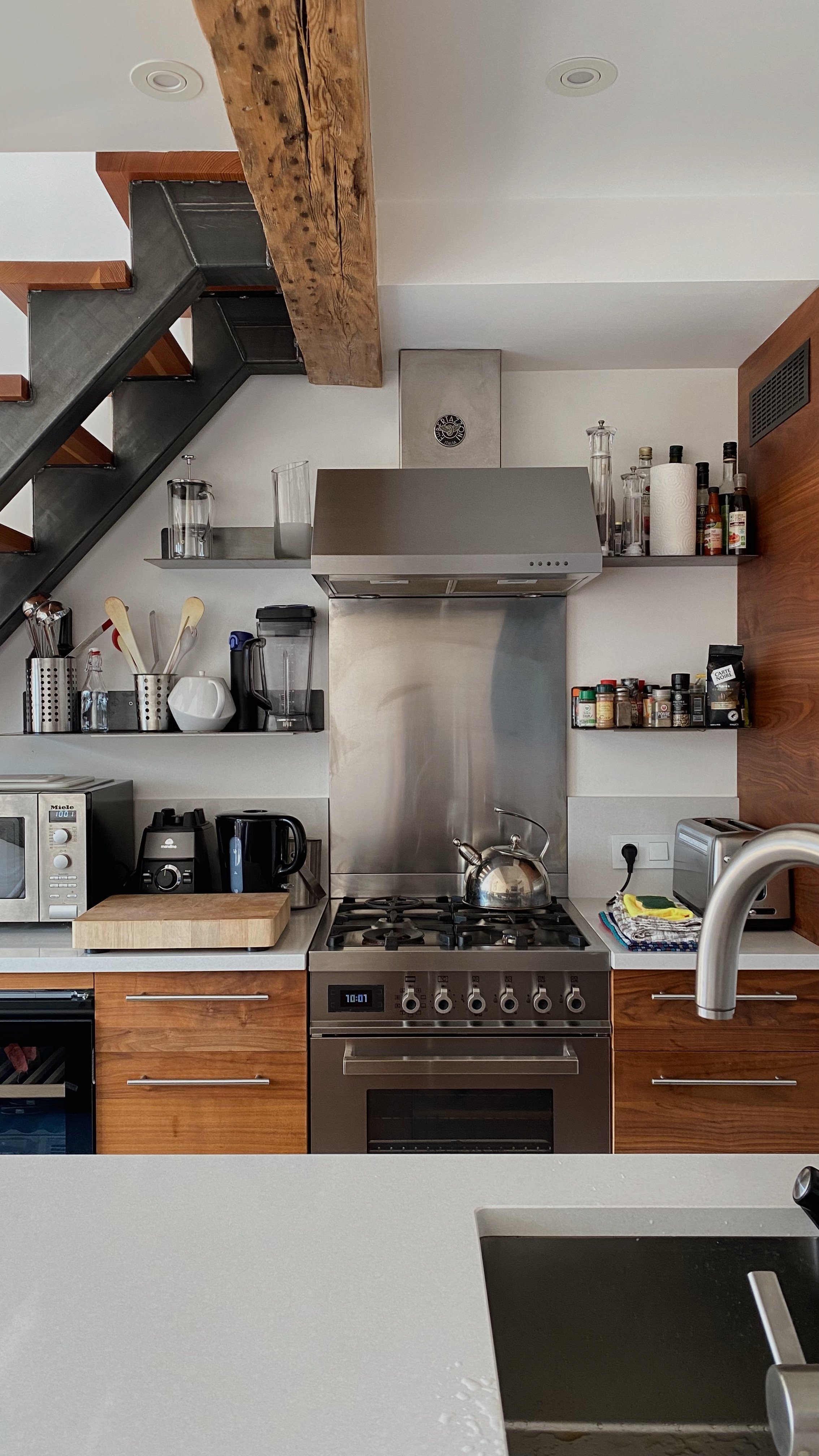
In the tidy kitchen, cooking does not require a cleanup before you even start. You know what you have, what you are out of, and what needs to be restocked. That sense of order reduces decision fatigue at times of the day when your mental energy is already stretched.
Household chores also take less time in a clean environment because everything has a place to go back to. You spend less time sorting and more time actually cleaning, which builds healthy habits that are much easier to maintain long-term.
At night, a clean space signals to your brain that it is time to rest. Visual distractions in a messy bedroom keep your nervous system activated longer than it should be. A tidy home gives it permission to wind down, which is why better sleep quality is one of the most consistent mental health benefits people notice after getting organized. These daily routines either drain your mental load or restore it. A clean home tips the scale toward restoration.
The weight that lifts
There is something that happens emotionally that is hard to describe but easy to feel. When your home is organized, you get a sense of accomplishment that goes beyond having a tidy space. It is the mental well-being and emotional well-being that come from knowing your environment is supporting you instead of working against you. People in clean, organized environments consistently report better moods, lower stress levels, and stronger emotional balance than people in cluttered environments. Negative emotions tied to a chaotic home are real, even when you have learned to push past them. Your physical space has a direct line to your mental state.
Mental load is the invisible to-do list your brain keeps running at all times. A clean home does not erase that list, but it removes an entire category from it.
When everything has a place, you stop tracking where things are. When you only keep what you use, you stop maintaining things that do not serve you. When your systems are clear, other people in your household can actually help without coming to you every time. That is how organizing your home starts to share the mental load instead of leaving it all with you. The result is peace of mind; you can feel it the moment you walk through the door.
Your first step toward a calm home
You do not need to overhaul everything at once. Picking one area and feeling the shift is enough proof that it works. Your closet, your kitchen counter, your messy bedroom. Start there and let that small win build momentum.
If you want to understand more about why we hold onto things we do not use and what it costs us, my Washington Post piece goes deeper. And if you are in the DC, MD, or VA area and want hands-on support building a calm home that actually works for your life, that is exactly what we do at Savvy Sloth Strategies.
Your home should give you peace of mind, not add to your list. That is worth making space for.