Why Taking a Social Media Break Boosts Creativity
If you’ve been feeling a constant need to check your phone lately, you’re not alone. In the digital age, social media platforms and being online are woven into our daily routines. We scroll during our lunch break, check social media updates while standing in line, and sometimes even glance at our phones at the dinner table. Every spare moment gets filled with short videos, text messages, or quick updates from digital platforms.
And yet, many of us walk away from those moments feeling worse. A little more comparison. A little more mental noise. Sometimes even subtle negative feelings about our own life.
This year has been rough for me personally, and I noticed my relationship with social media shifting. I love creating content and sharing ideas, but somewhere along the way I started losing the plot of why I was there in the first place. Instead of feeling creative, I felt overwhelmed by the constant stream of information coming from media and social channels.
So instead of forcing myself to keep posting, I did something different.
I took a social media break.
Not deleting every account forever. Just a temporary break from the constant input. I bricked my phone and stepped away for a few weeks.
What happened surprised me. My creativity came back. My mind felt calmer. And my mental health improved in ways I hadn’t expected.
What Social Media Does to Our Minds
Researchers have spent years studying the relationship between social media usage and mental health. A growing body of research, including systematic reviews and recent studies on young adults and college students, suggests that excessive social media use can negatively impact mental well-being.
Psychologists like Jean Twenge have examined how the increased use of social media platforms among younger generations may be connected to rising anxiety and depression. The constant exposure to curated highlight reels can lead to feelings of inadequacy, even when we know logically that social media isn’t real life.
Part of the challenge is biological. Social media is designed to trigger dopamine, the feel-good chemical in our brains. Each notification, like, or comment reinforces the habit of checking our mobile devices again and again. Over time, that constant stimulation can create patterns that resemble social media addiction.
Another factor is the sheer amount of digital input we process every day. Our cell phones connect us to social media accounts, news alerts, emails, and endless streams of content across digital platforms. When we spend too much time reacting to these inputs, our cognitive function suffers. Deep focus becomes harder, and our minds rarely get the quiet space they need to think.
Excessive screen time can even affect sleep patterns. Blue light from electronic devices interferes with sleep quality, making it harder for our brains to fully rest. Poor sleep alone can affect mental states, emotional regulation, and overall quality of life. None of this means social media is inherently bad. But it does mean that the constant pull of the digital world can quietly overwhelm our minds.
What Happened When I Stepped Away
When I stepped away from social media platforms for a period of time, the first thing I noticed was the extra time.
Without the automatic habit of opening apps on my phone, small pockets of the day suddenly opened up. A few minutes here, a few minutes there. Moments that used to disappear into scrolling became actual free time.
But the biggest change wasn’t the time. It was the mental space.
Without constant social media consumption shaping my thoughts, I started noticing things again. Conversations felt deeper. My social interactions felt more present. Instead of reacting to what I saw online, I was observing what was happening in my real life.

Ideas started appearing naturally. Not content ideas forced by algorithms or trends, but genuine thoughts sparked by my own experiences. I also processed emotions that had been sitting under the surface. Without the distraction of endless digital input, my brain had room to reflect. The change wasn’t dramatic overnight. But over a short period of time, I noticed significant improvements in my focus, my creativity, and my mental well-being.
Why Real Life Fuels Creativity
Social media can be inspiring, but it isn’t where creativity begins. Creativity comes from living. It comes from conversations with friends, a long phone call that turns into laughter, or noticing something small on a walk outside. It shows up when we try new hobbies, revisit old interests, or simply spend time paying attention to the present moment.
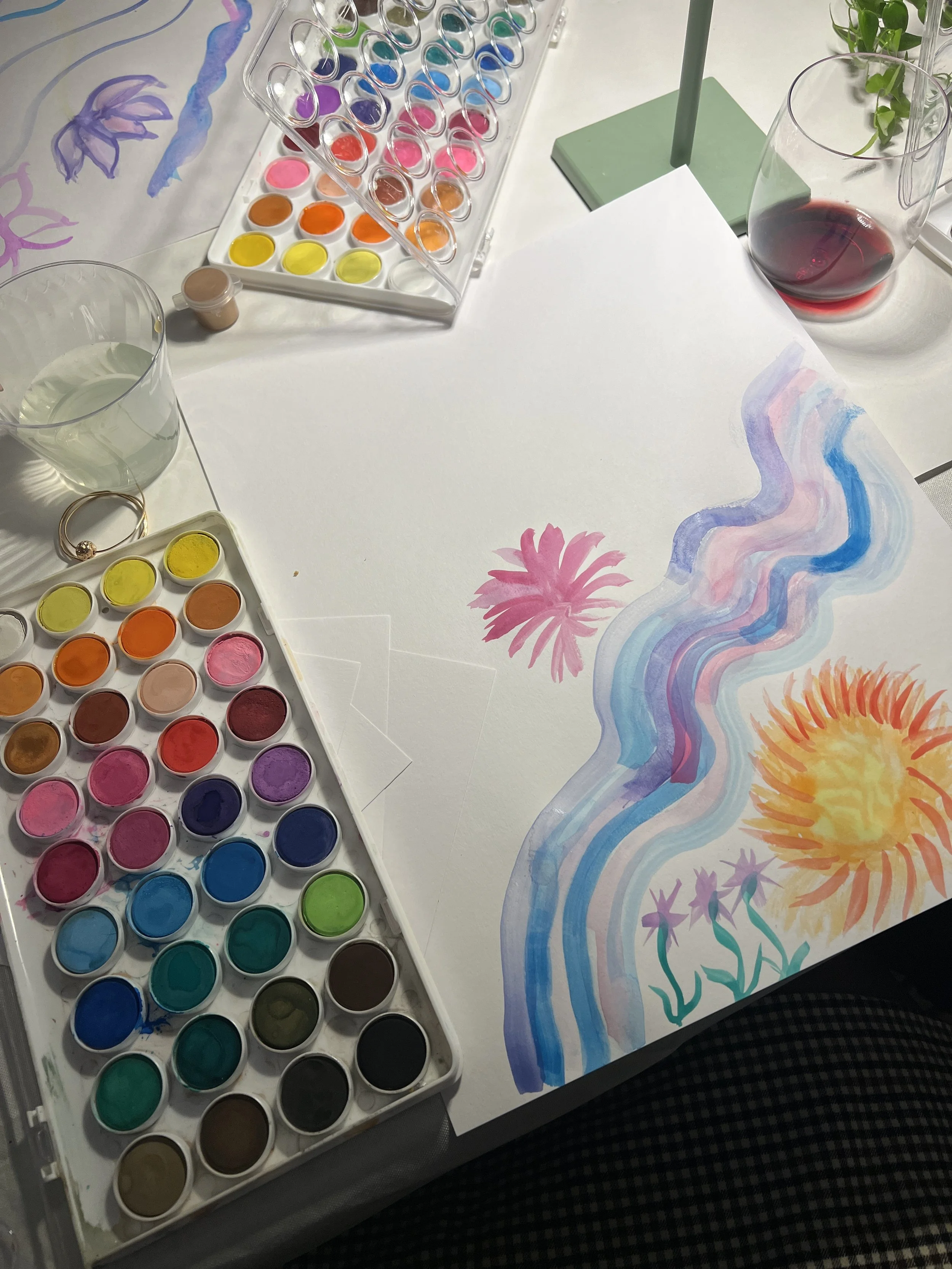
water color creations I made on my break!
Researchers such as Dacher Keltner have explored how real-world experiences can expand our perspectives and deepen emotional awareness. These experiences help our brains make connections between ideas, which is the foundation of creative thinking.
When we spend too much time in the digital world, it becomes easy to consume other people’s ideas rather than develop our own. But when we step away from social media updates and digital distractions, our minds naturally start connecting dots again.
Observation replaces reaction, and reflection replaces comparison.
It’s Okay to Slow Down
Social media is a powerful tool. For many of us, it helps us build businesses, share ideas, and stay connected to communities online.
But sometimes the healthiest thing we can do is slow down and log off.
If social media starts making you feel overwhelmed, distracted, or disconnected from your own life, it may be time for a break. That break doesn’t have to last forever. Even short breaks or a single weekend away from digital platforms can help reset your perspective.
The goal isn’t to eliminate social media completely. It’s about creating a healthy balance that supports your mental health, creativity, and quality of life. When you step away from the noise, your mind has room to breathe again. Your ideas become clearer. Your voice becomes stronger. And you may find that the story you want to tell becomes much easier to see.
Sometimes the best way to move forward is simply to do less for a little while.
Your mind will thank you for it.