Why Your Organizing Bins Aren’t Working (And What to Buy Instead)
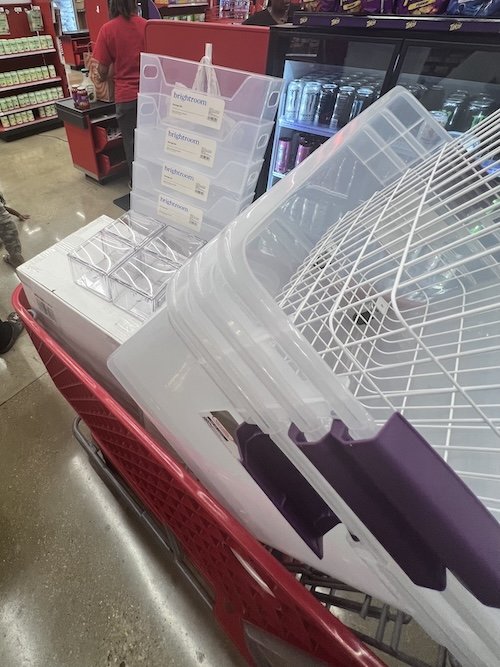
If you've ever stood in the storage aisle holding a pretty basket thinking, "Maybe this will finally get my life together," you're not alone. Most of my home organization clients start in the same place — with good intentions, a cart full of clear bins or wicker baskets, and a genuine desire to create more breathing room in small spaces.
And honestly? It makes sense.
Bins feel like a quick win — an efficient way to feel like you're getting a handle on "too much stuff."
But here's what most people never learn:
The bins are only as helpful as the system behind them.
This isn't about shaming your plastic containers, your pretty bins, or your cardboard boxes. It's about giving you the information you didn't have — so the next time you bring home new storage containers, they actually solve the problem instead of ending up in the donation pile or taking up too much space.
My goal is simple: Help you create a home that feels lighter, calmer, and easier to maintain — without wasting a lot of time, money, or energy.
Your Current Habits Aren't Wrong — They Just Need Tweaks
Life is full. Homes fill up fast. And most households have too much stuff and not enough time to use or maintain it all. So of course, you've done things like:
Saving shoe boxes or plastic boxes "just in case."
tossing small items into whatever open shelves or bins are empty
using plastic drawers, plastic bags, or long-term storage containers for craft supplies or office supplies
storing essential documents or favorite things together
buying acrylic bins or a clear lid container because you saw it at the Container Store, and it felt like the best solution
None of this means you're disorganized. It means you were doing the best you could with the tools you had. Watching HGTV and The Home Edit shows likely gave you a spurt of inspo and you figured now is the time to capitalize on it. However, what those shows don't share is the psychology of why certain bins work in those spaces they select. So this blog is meant to do that for you.
It's time to learn better tools — ones that support your real habits, your signature style, and your desire for mental clarity.
Why the Bins You Already Have Aren't Working
Most bins fail for a few simple, fixable reasons — none of which are about effort or intention.
1. The bin was chosen before the system.
When we're overwhelmed, we want relief now. So we grab pretty bins, plastic containers, or glass containers, hoping they'll magically create order.
But if you haven't decluttered or grouped similar items first, the bin fills → then overflows → then multiplies.
This is how clutter problems, junk drawers, and "mystery bins" happen.
It's not you. It's the order of operations. Before we purchase anything we need to take inventory of what we're looking to contain. Which is the whole point of the bins. Bins are meant to contain your belongings, zones and systems you're looking to create. So you have to create the zones and systems first before you select what will contain them. Simple as that.
2. The bin doesn't fit the space.
Sizing matters more than style:
too tall for open shelves
too shallow for heavy items
round bins that waste storage space
a solid color lid that hides everything
high-density polyethylene boxes meant for cold temperatures, sitting in a high-use closet
It's nearly impossible to make a bin work if it wasn't designed for that physical space or use case. So measure the area first and think critically about how you want to move within the space. This will help you pick the right bins that will support your habits not add more friction.
3. The bin doesn't match your habits.
This is where ease over hustle comes into play.
If a lid adds resistance, you won't use it. If your partner can't tell where things go, they won't put things back. If your kids can't decode your systems, they'll avoid them. If you're neurodivergent, clear plastic bins might feel overstimulating — while opaque bins create calm.
Your brain needs a supportive environment, not a stressful one. So the bins you pick really need to fit your routines and the routines of the folks you're sharing the space with.
4. The bin isn't label-friendly.
Labels turn chaos into clarity. Everyone's brain works differently, so what may be intuitive for you won't be for your partner. That's why I am such a stickler for labels. You can't deny a label, and even when you're not firing on all cylinders, you can still determine where things need to go when it's labeled.
If a bin's material makes labeling impossible — or labels constantly fall off — the system breaks down fast. This is why drawer dividers and label-friendly plastic containers tend to outperform cardboard boxes or pretty bins without smooth surfaces. Your bins should have a fairly long shelf life and not be ruined by a label mishap. Make sure that the material of your bin makes putting on and taking off labels seamless.
5. The bin is doing too many jobs.
If the only bins you have are multitasking everything — holiday-season décor + old mail + toys + important documents + recycling overflow — you don't have a system. You have a storage container trying (and failing) to do the work of five. Again, this is not a failure. It's a sign your home is asking for structure, not more stuff. So declutter and give each bin one job, one category, and one zone. It's normal for the bin not to be filled to the brim. It shows you what you actually own, what you need to stock up on, and what you can probably hold off on collecting more of until you use what you have.
What to Buy Instead (Without Overspending)
You don't need full-price luxury bins or a container haul. You need the correct bins for your habits and the space you have. Here are low-stress, high-impact, great value choices:
✔ Open-face containers: A perfect way to eliminate resistance.
✔ Clear bins or clear plastic bins: Ideal for visual thinkers and small items.
✔ Stackable plastic boxes: Maximize vertical storage space in a laundry room, closet, or office.
✔ Boxy acrylic bins: A good idea for small spaces where round bins take up space.
✔ Opaque bins: Visual calm for busy brains. Just add clear labels.
✔ Bins with compartments or drawer dividers: The best solution for craft supplies, office supplies, or similar items.
✔ Handles + easy grip design: Helpful for grab-and-go areas and heavy items.
✔ Label-friendly materials: Long-term storage success depends on labels that stick. If you're more of a basket fan, make sure you can add label clips.
These aren't "the best bins" because they're trendy — they're the best bins because they work with your routines, not against them. They also have universal uses, so you can make a one-time investment and, as your needs shift, likely repurpose these bins for other areas or rooms.
Now it's time to build the System
Bins don't create organization — systems do. This is where my Organize It Once Guide supports you.
Inside, you'll learn how to:
organize with intention
group similar items to create zones
measure correctly for different sizes and spaces
prevent wasted money on products that don't serve you
create sustainable systems for long-term storage + daily use
Choose plastic containers, glass containers, or clear bins based on your habits
avoid common mistakes that lead to a waste of money and having to reorganize multiple times.
Because getting organized doesn't have to be complicated — or expensive. And a bin should never be a band-aid. When you start with intention, every storage solution becomes powerful.
👉 If you're ready for more space, more calm, and fewer decisions, grab the Organize It Once Guide and create a home that supports you — not the other way around.