5 Tips for Using a Paper Planner That Actually Work
Let's be honest—this time of year brings out the planner enthusiast in all of us. There's something about a new calendar year that makes us believe this will be the year we finally get our lives together. We browse the best planners, debate between an Erin Condren and a Happy Planner, maybe even splurge on a Hobonichi Techo because it's just so pretty. We stock up on sticky notes in different colors, find our favorite pens, and feel that rush of possibility when we open that blank page for the first thing on January 1st.
And then? Life happens.
By the time we hit the end of January, that beautiful new planner sits untouched on the desk. The daily schedule we swore we'd stick to feels more like a reminder of everything we didn't do. The weekly spreads that once felt full of promise now just highlight how behind we are on our to-do list.
Here's the real talk: The easy part is buying the planner. The hard part is building the daily habit of actually using it.
I'll be transparent—I don't use a paper planner anymore. I'm an Asana girl through and through because digital tools integrate with everything else in my life, and it feels less redundant. But back in high school and for a long time after, I was all about that physical planner life. And these five tips? They kept me consistent and made the whole process actually helpful, rather than just another thing on my busy schedule.
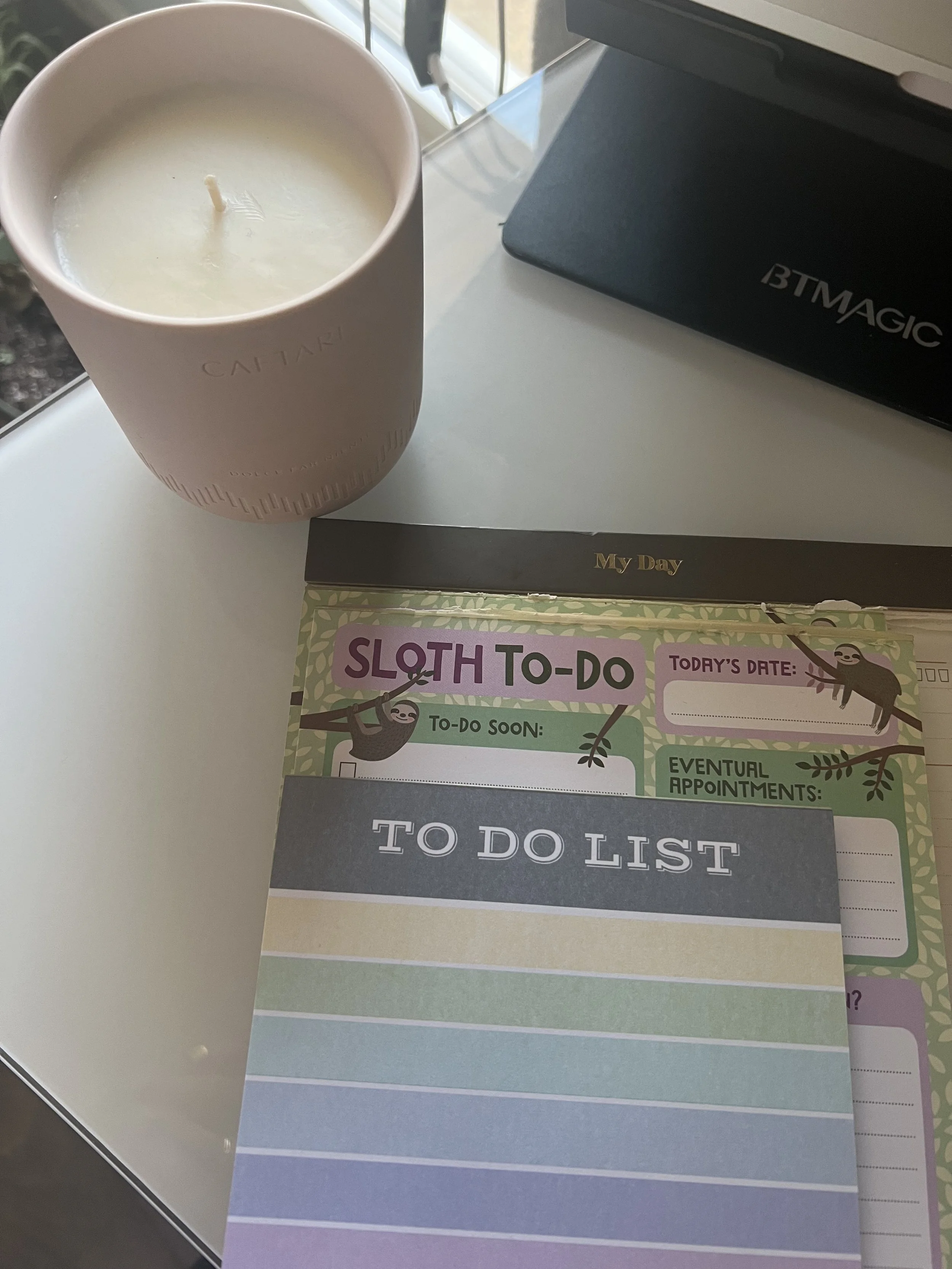
The stack of planners I have yet to finish using lol!
1. Establish a Time to Fill and Update Your Planner (And Make It Enjoyable)
The best way to make your planner work for you is to habit-stack the planning process with something you genuinely enjoy. This isn't about forcing yourself to sit down with your weekly planner at a specific time that feels like a chore. It's about finding a moment in your day that already exists and layering your planning routine into it.
Maybe it's Sunday evening with a glass of wine while you map out your weekly schedule. Maybe it's first thing in the morning with your favorite playlist, setting your intentions for the day ahead. Or perhaps it's during your lunch break when you've got a little bit of open space to breathe and think about the next day.
The key here is consistency, not perfection. You don't need much time—even 10-15 minutes is enough room to get clear on your daily tasks and weekly task lists. When you pair planning with something pleasant, you're way more likely to stick with it. Less friction, more flow.
2. Choose a Planner That Gives You Both the Big Picture and the Daily Details
Here's where a lot of people go wrong: they pick a planner type based purely on aesthetics (guilty—I've been there). But the right planner for you needs to serve your actual needs, not just look good on your desk.
You need both a long-term view and a short-term view. That means finding a well-organized planner that includes:
Monthly spread or monthly view: So you can see the whole month at a glance, track important dates, note due dates, and get that big picture perspective on what's coming.
Weekly spreads or daily planners: So you can zoom into the specifics of your week or even a single day, breaking down specific tasks and managing your daily schedule without feeling lost.
Some of the best planners offer both—like a monthly calendar at the start, followed by weekly pages or weekly view layouts. Others give you an entire page for a single day if you have a packed schedule that needs that level of detail. Different planners work for different people, so think about your specific needs before you commit.
If you're managing multiple projects, family members' schedules, or a new school year with a ton of moving parts, you'll want a planner with enough room for notes pages, a notes section, or even a back-of-the-planner area for do-later things and menu plans. If you prefer a minimalist approach, a compact monthly planner with weekly planning sections might be the perfect fit.
3. Stick to the Rule of Threes: Plan Three Categories Max
This is the tip that changed everything for me. When I was using a paper planner, I tried to track everything—work projects, personal errands, social plans, fitness goals, meal prep, phone call reminders, blog post ideas, appointments (yes, I was all over the place). And you know what happened? My planner became a source of stress instead of support.
The rule of threes keeps things manageable. Pick three categories to plan in your planner, and stick to them. My favorites were:
Work: Projects, meetings, deadlines, specific times for focused work
Social: Time with friends, family events, social media content planning
Personal Development: Goal setting, long-term goals, and habits I wanted to build
You might choose different categories based on where you are in life. Maybe it's work, family, and self-care. Or business, creative projects, and health. The point is to limit the scope so your planner doesn't become a dumping ground for every single thought that crosses your mind.
Use your digital calendar (like Google Calendar) or your cell phone for the little things—quick reminders, one-off tasks, or time-sensitive items. Save your planner for the stuff that actually moves the needle on your goals.
4. Designate a Color to Each Category for Easy Access
Once you've chosen your three categories, assign each one a color. This is where those different colors of pens, highlighters, and sticky notes come in handy. Sticking to our example categories from tip 3:
Work = Blue
Social = Pink
Personal Development = Green
When you open your weekly planner or flip to your daily planners, you can see at a glance where your focus is for the week. Is your entire weekly spread covered in blue? You might need to carve out more time for rest or connection. Is there barely any green? That's a sign your personal goals are getting pushed to the back burner.
This visual system makes it much easier to spot patterns, adjust your schedule, and ensure you're not overloading in one area while neglecting another. It's a great way to stay balanced without having to analyze every day of the week in detail.
5. Commit to Three To-Dos at a Time
Here's the thing that derails most people: overloading your to-do list.
We've all done it. We list 15 tasks for a single day, convinced today will be the day we finally get it all done. And then we complete maybe three of them, feel like failures, and stop opening the planner altogether because it just reminds us of everything we're behind on.
Instead, commit to three to-dos at a time. That's it. Again the rule of threes is at play, but it’s because it works! Our brains are overloaded as it is, so we can’t retain or focus on more than three things at a time ( if that!). So the less you have to manage the easier it is for you to remember, focus and complete.
When you finish those three tasks, you can add more if you have the energy and time. But starting with three keeps your daily tasks realistic and achievable. It creates momentum instead of friction. And when you actually check off those three things? You feel accomplished instead of defeated.
This approach works whether you're using a daily planner with plenty of space or a simple weekly task list. The key is giving yourself permission to do less—but do it well.
Finding Your Perfect Planner System
Look, I know the planner world can feel overwhelming. There are so many planners, layouts, and types to choose from. You've got your top planner picks from influencers, recommendations from friends, and that one pretty planner you saw on social media that you can't stop thinking about.
But here's what I want you to remember: The best time to start using your planner effectively isn't when you find the "perfect" one. It's when you build a system that actually works for your life.
Whether you use a digital planner, a physical planner, or a planner pad with tear-off weekly pages, the principles remain the same. Make it a habit. Keep it simple. Focus on what matters. And give yourself grace when life gets messy—because it will.
You don't need to be a planner enthusiast with a color-coded system for every day of the week. You just need an effective system that helps you show up for the things that matter most. Less chaos, more clarity. Less overwhelm, more intention.
That's the whole point.
Ready to lighten your mental load even more? If you're realizing that even the best planners can't solve the deeper overwhelm in your work or home life, I'm here to help. From home organization to project management systems, I help ambitious women like you create calm, sustainable systems that actually stick. Let's chat about what's weighing you down.