The Questions to Ask Yourself Before You Organize
The clutter isn't the problem. It's the constant low-grade anxiety every time you walk past that pile in your living room. The mental energy spent deciding what to do with it — again. The guilt about the things you're keeping for sentimental reasons but never actually use.
Maybe you just moved into a new home, or maybe you've been in the same space for a long time and you're ready for a reset. Either way, you know it's time for an organizing project. You just don't know where to begin.
Here's the good news: the first step to creating an organized home that lasts has nothing to do with bins, labels, or trips to the Container Store.
It starts with asking the right questions.
Why Questions Matter More Than Containers
As a professional organizer, I've worked with families juggling too much stuff in too little space, busy professionals whose home office has become a catch-all, and overwhelmed homeowners who think the only way forward is to buy more storage.
But here's what I've learned: if you don't understand why your space got cluttered in the first place, you'll end up right back where you started.
Marie Kondo's book The Life-Changing Magic of Tidying Up taught us that organizing is about values, not just stuff. Peter Walsh's decluttering process emphasizes the same thing. And after years of helping clients create organizational systems that actually stick, I can tell you this is true.
The only way to create lasting change — the kind that reduces your mental load and gives you energy back — is to begin with clarity, not containers.
That clarity comes from asking yourself four key questions before you organize a single item.
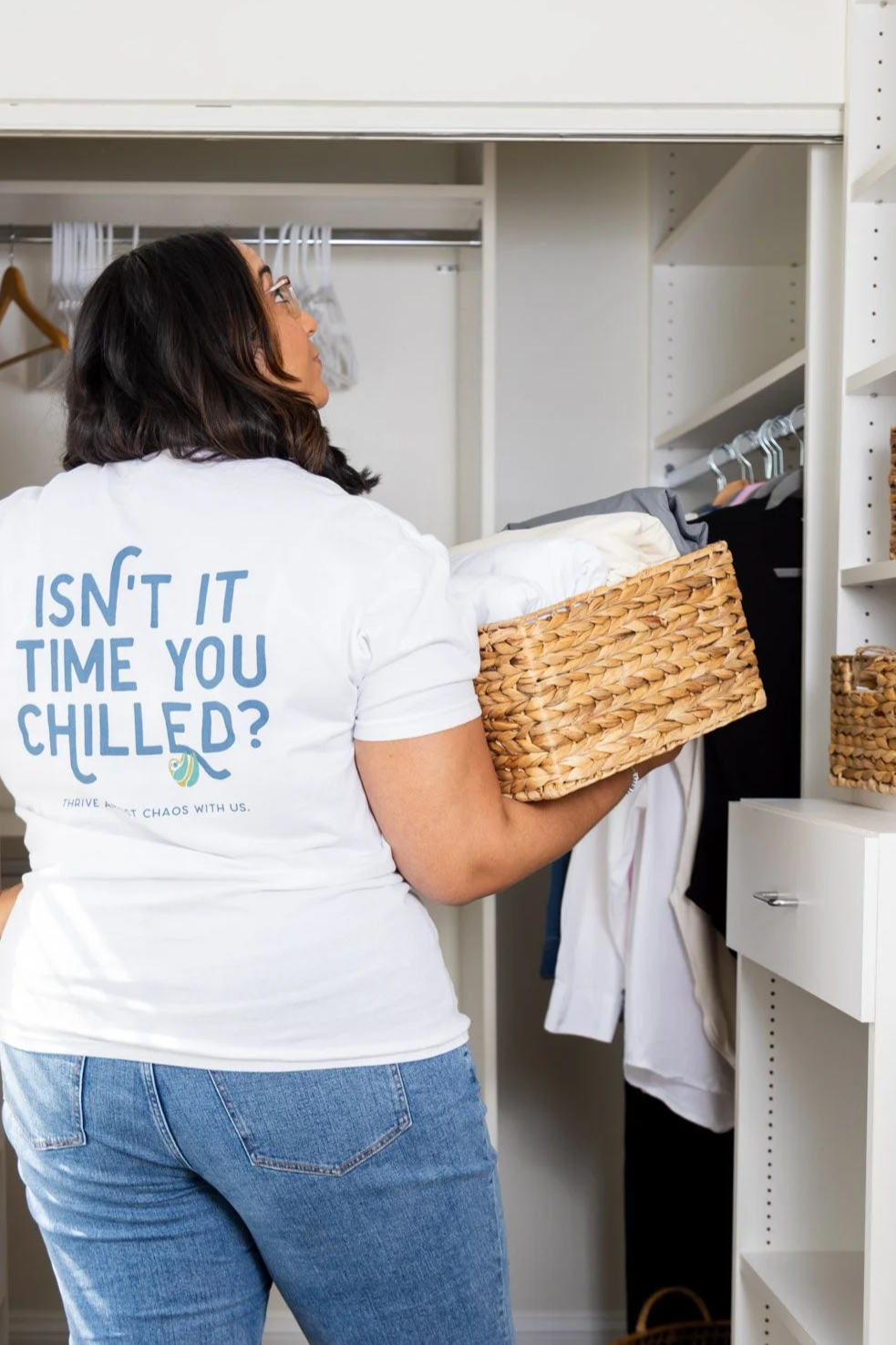
The Four Questions That Change Everything
These are the same important questions I use in my Organize It Once framework and with every client who books a clarity call or in-home consultation with Savvy Sloth Strategies. Whether you're organizing a new home, tackling the hardest part of decluttering, or trying to create a calmer living space, these questions will give you the clear vision you need.
1. How do I want to feel in this space?
This is the first question, and honestly, the most transformative one.
When clients reach out about an organizing project, they usually start with what's broken: "My closet is a mess," "My living room has too much visual clutter," or "I have a storage unit full of stuff I haven't touched in years."
But I always redirect them with a great question: How do you want to feel when you walk into this space?
Maybe you want your bedroom to feel calm and restful. Maybe you want your home office to feel productive and focused. Those emotions are your compass — your clear vision for what "organized" actually means to you.
If you want a calm living room, you'll hide small items in closed storage and keep surfaces clear. If you want an inspiring creative space, you'll display books or supplies within easy reach.
One client realized she wanted her bedroom to feel like a retreat — which meant her work laptop had to leave. That one boundary gave her better sleep and less decision fatigue every morning.
This isn't just about making things pretty. It's about aligning your organizational systems with your emotional well-being. That's self-care. And it's the only way your efforts will last in the long run.
2. What is this space for?
Once you know how you want to feel, the second question is about purpose: What is this space actually for? Most of us use one room for five different things. The dining table doubles as a workspace. The nightstand becomes a charging station. Suddenly your living space is working overtime — and so is your brain.
Every room should serve a clear purpose. Your kitchen is for nourishment and connection. Your home office is for focus. Your bedroom is for rest.
When you define what belongs there — and what doesn't — it becomes easier to make confident decisions about every single item.
Ask yourself:
Does this particular item support the purpose of this room?
Do I actually need it here, or am I keeping it "just in case"?
A bottle opener belongs in your kitchen, not your desk drawer. That stack of unopened mail belongs in your office, not on the coffee table where your family members gather.
Clarifying purpose sets clear boundaries. And clear boundaries are a great way to reduce mental clutter and maintain order over time.
3. What's allowed in this space?
Now that you know what your space is for, it's time to decide what's allowed in it. This question is about establishing rules that keep your organized home from slipping back into chaos.
Let's say your bedroom is for rest. What's allowed? Cozy bedding, soft lighting, maybe a few sentimental items that make you smile. But that pile of laundry or stack of work papers? Not allowed.
The same goes for your home office. If the goal is productivity, then similar items should be grouped together — notebooks, pens, files — while distractions stay out.
This step takes hard work, but it's the only way to design spaces that support your goals instead of competing with them. It's also where practical solutions come into play: labeled bins, drawer dividers, or a Lazy Susan can all help keep your boundaries clear.
The beauty is that once you've set these limits, maintenance takes much less time. You'll spend fewer weekends reorganizing and more time actually enjoying your space.
4. What's not allowed in this space?
This is the question that separates short-term tidying from sustainable organization.
The hardest part of any decluttering process is saying no — especially when it comes to sentimental items. But identifying what's not allowed in your space helps you protect your peace. Maybe your creative nook isn't the place for your kids' toys. Maybe your living room isn't the holding zone for deliveries that need to be returned. Maybe your storage unit is full of things you've kept for sentimental reasons but never actually use.
When you name those categories, you remove the biggest blockers to staying organized. If letting go feels like a difficult task, here's some expert advice: remember your end goal. You're not erasing memories — you're creating room for what truly matters in your current season of life.
If you're struggling to part with a particular item, try assigning it to a smaller boundary — like a single keepsake box. Work with photo managers if you need help digitizing memories. That way, every small item inside is worth keeping because it's been intentionally chosen.
The goal isn't to have less for the sake of it. It's to have what serves you best.
What Happens When You Start with Clarity
If you've been organizing for a long time and feel like you never make progress, it's because you started in the wrong place. Asking the above questions first transforms your organizing project from a temporary fix into a sustainable lifestyle shift.
When you lead with intention, your space starts to work for you — not against you. You'll spend less time cleaning, searching, and managing clutter, and more time actually living in your own home.
Whether you're moving into a new home or re-imagining your current one, these questions will help you:
Create a system that meets your specific needs
Manage your sentimental items without guilt
Avoid wasting money on new furniture or duplicate purchases
Build organizational systems that are easy to maintain in the long run
Lighten your mental load so you have energy for what actually matters
When you take this first step, organizing stops being a chore and becomes a form of self-care. Because creating an organized space that truly reflects your life and values is one of the most empowering things you can do.
Ready to Organize Once And For All?
These four questions are just the beginning.
Organize It Once walks you through the full process — room by room, decision by decision — so you can finally stop re-organizing and start living in a space that lightens your mental load instead of adding to it.
Inside, you'll find:
These same guiding questions plus additional prompts for every organizing project
Room-by-room advice tailored to your specific needs
Product recommendations (so you're not wandering the Container Store guessing)
Practical solutions to the most common organizing challenges
A clear vision for creating an organized home that actually lasts
Whether you're downsizing, decorating a new home, or simply craving more calm in your daily routine, this guide meets you where you are.
Grab your copy of Organize It Once and take the guesswork out of creating your organized home.
Because with the right mindset, clear boundaries, and a little expert direction, your space can finally support the life you want to live — not the other way around.
And that? That's life-changing magic.